Recent post
No items found.
Beyond repairs, giving your home the care it deserves
This isn’t just a blog—it’s your trusted space for expert tips and repair ideas to keep your home safe and running smoothly.

Food trucks have become a focal point for health regulators. Unlike stationary restaurants, food trucks operate under unique mobile constraints, making them a top priority for safety inspections. Many new entrepreneurs feel intimidated by local regulations, fearing fines or unexpected shutdowns. However, with the right preparation, inspections aren’t a nightmare—they are a benchmark for your business's professionalism.
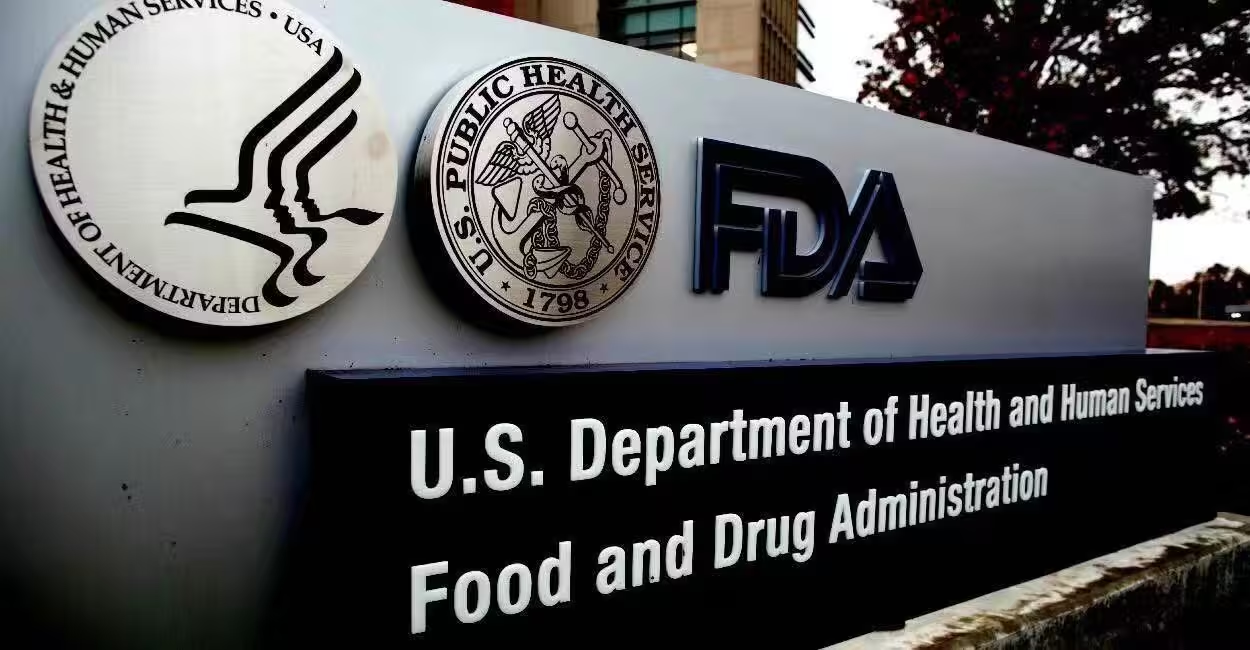
The FDA sets unified food safety standards in the U.S., but enforcement varies by state and county. As a solo entrepreneur, you aren't just a cook—you are an industry researcher. Treating regulatory compliance as an investment in your brand’s reputation will set you apart from competitors.
1. Routine Inspections: Annual, unannounced visits to ensure compliance with local codes. Think of these as a safety check that keeps foodborne illnesses at bay.
2. Complaint-Based Inspections: If a customer reports discomfort or files a complaint, health departments will investigate. This is where you must be most diligent.
3. Follow-up Inspections: If a violation occurs, you’ll be given a grace period to correct it. As long as you address the issues, your business continuity is safe.

To stay "inspection-ready," keep this checklist visible in your truck:
● Temperature Control: Refrigerators and freezers must be equipped with thermometers. Monitor them daily to ensure cold chain integrity.
● Cross-Contamination: Maintain strict separation between raw meats and ready-to-eat foods.
● Labeling: Every container must have a clear "Prep Date" and "Time" label.
● Handwashing: Ensure dedicated handwashing sinks are always stocked and accessible.
● Chemical Safety: Store cleaning supplies and hazardous chemicals in a dedicated area away from food.
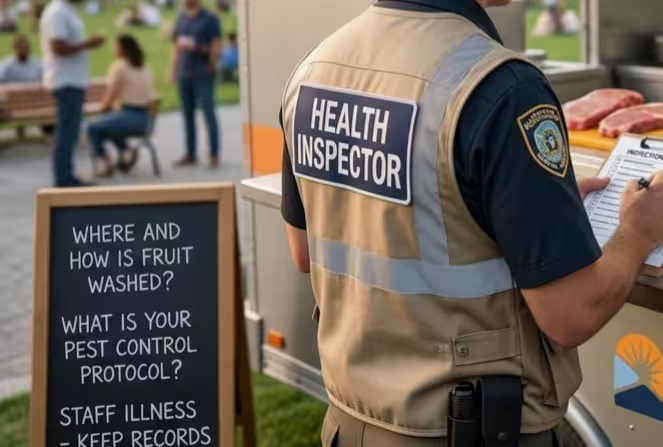
Inspectors prioritize high-risk activities:
● Improper handwashing.
● Unknown or unverified food sources.
● Improper storage temperatures.
● Cross-contamination of raw and cooked items.
● High-risk perishables (meat, poultry, seafood) handled without strict temperature logs.
Treat this like a final exam. Train your staff to handle questions such as: "Where and how is fruit washed?" or "What is your pest control protocol?" Keep written records of staff illness; this documentation is your best defense if a customer files a complaint.
Many health violations are actually "design flaws." Poor layouts or materials that are hard to clean make daily maintenance a struggle. New Beacon food trucks are engineered with global compliance in mind. From our material selection to equipment ergonomics, our trucks are designed to be "inspection-ready" right out of the factory. Our experience exporting to the U.S., Europe, and Southeast Asia ensures that your truck meets local standards, giving you peace of mind from day one.
Choose New Beacon. Let’s build your food truck business on a foundation of reliability and compliance.
This isn’t just a blog—it’s your trusted space for expert tips and repair ideas to keep your home safe and running smoothly.